

Our People
Celebrating Women & Girls in Science
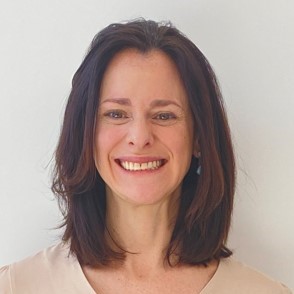
To celebrate International Day of Women & Girls in Science, we spoke with Alexandra Lovett, Medical Director at Alkermes to learn about her unique career journey in the STEM field.
Q: Tell us about yourself – where are you from, what is your background and what kind of work do you do at Alkermes?
I’m Alexandra (Ali) Lovett, a Medical Director on Alkermes’ Drug Safety and Pharmacovigilance team. I’ve been with the company for almost two years. Before joining Alkermes, I worked in a similar role at another global biopharmaceutical company and before that, I was a practicing neurologist in the hospital setting. I’m originally from New Jersey but came to the Boston area for my undergraduate studies, with my training path then involving medical school, neurology residency, and neuro-oncology fellowship. Today, I focus on our orexin 2 receptor agonist program where I’m responsible for evaluating the safety of this investigational treatment.
Q: Can you tell us more about pharmacovigilance? What’s your day-to-day work like?
Pharmacovigilance is the study of drug safety. Throughout the drug development process, it’s critical to understand not only whether a treatment works but also how it may affect patients in unexpected ways. In my role, I collaborate with cross-functional teams across research and development, regulatory, legal, corporate affairs and more. Together, we review and assess incoming safety data in our trials to ensure we understand the emerging safety profile of our investigational therapies.
Q: How did you find your way into this field? How has your past training as a physician helped you in your current work?
I’ve always been driven by the desire to help people and improve patients’ lives — that’s what drew me to medicine and what keeps me motivated today. I was specifically driven to become a neurologist because of the excitement of understanding how the nervous system works and how problems within the nervous system could lead to the downstream impact to a patient, but also because of the significant unmet need that remains in the neuroscience field. In my career journey, I determined that I needed more balance and predictability between my work and family life but still wanted to make a meaningful impact on the lives of people suffering from neuropsychiatric disease. That’s when I discovered drug development, and specifically drug safety, as a career path.
This work has been incredibly rewarding. My clinical training and understanding of patient experiences helps me evaluate data with a critical eye and communicate clearly with colleagues across functions to achieve our combined goal of developing new therapies for patients.
Q: What encouraged you early in life and your academic career to pursue a career in STEM? Did you have any mentors who supported you along the way?
As a child, I always saw doctors as people who helped others feel better and that idea stayed with me. Like many women in STEM, I was fortunate to have a support system that believed in me, motivated me and helped me push through moments of doubt, especially when faced with adversity.
My grandfather played a particularly influential role. He was my biggest cheerleader and introduced me to his physician who became my first mentor and showed me what my future in medicine could be. Mentorship has continued to be important throughout my career. During my neurology rotation in medical school, I met a resident whose dedication and passion for understanding and treating neurologic disease inspired me to pursue neurology. We’re still close today and she remains a sounding board as I grow in my career. I’ve also found satisfaction in being a mentor for other women looking to pursue careers in medicine and drug development and hope to continue to provide support for future generations as they consider careers in the biotech industry.
Q: What advice would you give to young women who are interested in working in the biotech industry?
Throughout medical school, residency and my career in this industry, I’ve seen the impact women can have in STEM organizations. Teams that embrace a diversity of thoughts, backgrounds and perspectives are, in my experience, more innovative and higher performing.
For young women especially, but also anyone considering biotech or any STEM field, here’s my advice: if this work excites you — if it inspires you or gives you purpose — don’t let anyone deter you. Everyone, regardless of gender, faces challenges, doubts or unexpected setbacks along the way. My hope is that future generations use those moments as fuel to keep going and continue making a difference.
Related Stories
Celebrating Women & Girls in Science
Laura Tan reflects on her career journey and the importance of creating opportunities for women in STEM.
Recognizing Women & Girls in Science
Anh Hoang shares her story in celebration of International Day of Women & Girls in Science.
Last updated: February 2026